

DENTAL IMPLANTS in Rochester, NY
Our Dental Implant Patients Have Something to Smile About
Looking for dental implants in Rochester, NY? Dr. Park at Irondequoit Family Dentistry offers personalized care to help restore your smile, function, and confidence. If you are missing one tooth, several teeth, or currently struggling with loose dentures, dental implants may offer a stable, natural-looking way to restore your smile. At Irondequoit Family Dentistry, Dr. Park provides dental implant consultations in Rochester, NY, helping patients understand their options for replacing missing teeth with long-lasting, comfortable restorations designed to look, feel, and function like natural teeth.
What are Dental Implants?
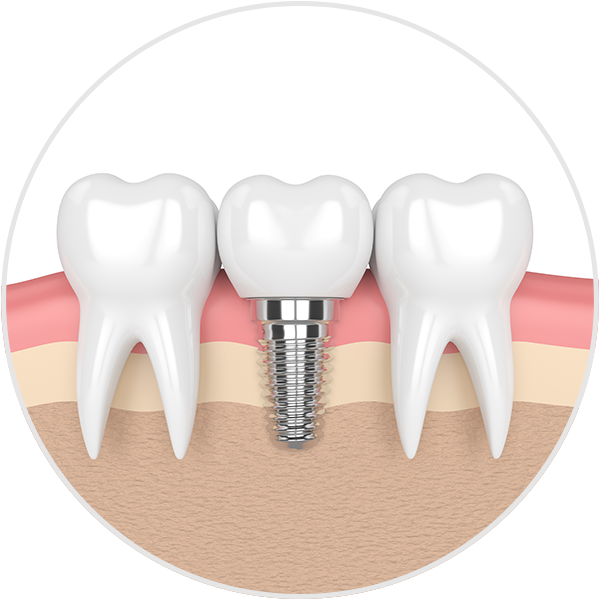
A dental implant is a titanium post placed in the jawbone to replace the root of a missing tooth. Over time, the implant bonds with the bone, creating a strong foundation for a replacement tooth. Once healing is complete, a custom restoration—such as a crown, bridge, or denture—is attached with an abutment. This provides a stable, durable, and natural-looking solution for tooth replacement compared with some traditional restorative options.
Dental Implants look, feel and function like natural teeth and are more natural than bridges and more comfortable than partial dentures. Dental implants allow you to regain the ability to eat virtually anything. Since they are designed to mimic the look of natural teeth, patients can smile with confidence. Dental implants also help preserve facial structure, preventing bone deterioration which can occur when teeth are missing.
What are the Parts of a Dental Implant?
Implants are made of three parts:
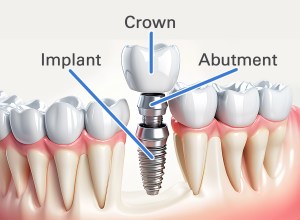
- Implant Post: The post serves as the artificial tooth root that is placed into your jawbone where it bonds with the bone, creating a strong foundation for artificial teeth. The post is made of titanium, a lightweight material that has a proven track record of successfully fusing with your jawbone.
- Abutment: The abutment is a small piece of titanium that fits on top of the implant post like a cap and connects the implant and the crown.
- Crown: Crowns are custom-made, visible cap that sits above the gumline and functions like a natural tooth. Crowns are usually made of porcelain or ceramic.
 What are the Benefits of Dental Implants?
1. Dental Implants Look and Feel Like Natural Teeth
Dental implants closely mimic natural teeth in both appearance and function, allowing you to chew, speak, and smile with confidence. Because they are securely anchored in the jawbone, they feel stable and comfortable during everyday activities. After getting implants people find they feel more confident eating, speaking, and smiling—much more so than if they were wearing dentures. Many patients even forget they are there because dental implants can feel so much like their own teeth.
2. Dental Implants Provide Strength and Durability
Your dental implants will function very similarly to natural teeth, unlike dentures that tend to slip and pinch. You will be able to eat your favorite foods with confidence and ease. Both the post and abutment are made of titanium, which is one of the strongest metals known to man and is also biocompatible. This means your body is very unlikely to reject it. If maintained properly, you dental implants will last a very long time.
3. Dental Implants Improve Aesthetics and Speech to Give You More Confidence
Dental implants are skillfully designed to mimic your surrounding teeth and therefore have a highly realistic look and feel. This allows you to speak and smile freely without others being able to tell that you’ve had tooth replacement work performed. Choosing dental implants to replace missing may be a better alternative than dentures.When people have dentures, they often become focused on using the tongue as a method of keeping dentures in place, which can make speaking effectively difficult. Dental implants allow you to maintain your normal speech patterns.
4. Dental Implants Help Retain the Structure of Neighboring Teeth and Bone Loss
The traditional practice is to replace a missing tooth with a bridge or removable partial denture. These procedures compromise the healthy structure of adjacent teeth in order for them to support the new appliance. The supporting teeth are weakened, putting them at risk for future issues as well as making proper oral hygiene difficult. Implants allow you to retain the healthy structure of the adjacent teeth, as well as avoid the need and inconvenience of having to use a removable appliance. They also help support jawbone health by stimulating the jawbone, which helps it to maintain its structure and discourages future bone loss.
5. Easy Maintenance
Implants are cared for just like natural teeth, with regular brushing, flossing, and routine dental visits.
Evaluation for Dental Implants in Rochester, NY
If you are looking for implant dentistry in Rochester, NY, Dr. Park and his staff will do everything they can to make you as comfortable as possible during this procedure. First, you will need to come in for a dental/radiographic examination and health history visit. During these consultation visits, your specific needs and considerations will be addressed by an Irondequoit Family dentist. Your questions and concerns are important to us and our team will work with you very closely to help make your procedure a success.
Surgical Advances in Dental Implants
Advances in dental implant technology have made treatment more comfortable, efficient, and predictable for many patients. In some cases, Dr. Park may be able to place a dental implant at the same time a damaged or failing tooth is removed. This approach can reduce the number of surgical visits needed and help preserve the surrounding bone and gum tissue.
Not every patient is a candidate for same-day extraction and implant placement. During your dental implant consultation at Irondequoit Family Dentistry, Dr. Park will evaluate your teeth, gums, jawbone, bite, and overall oral health to determine the safest and most effective treatment plan. If bone grafting is needed to strengthen the area before or during implant placement, this will be discussed with you in advance.
Dr. Park performs dental implant surgery, tooth extractions, and bone grafting when necessary. Our team can also provide a temporary prosthesis when appropriate, so you do not have to go without teeth during the healing process. After the implant has healed and bonded with the bone, your permanent implant crown, bridge, or denture is custom-made to restore comfort, function, and appearance.
What is the Dental Implant Procedure?
The dental implant procedure is completed in stages so the implant can heal properly and provide a strong foundation for your replacement tooth or teeth. Each patient’s dental implant process is similar, but factors such as the type of implant, the condition of your jawbone, and whether additional procedures (such as bone grafting) are needed can affect the timeline. While each patient’s treatment plan is different, most dental implant cases follow these basic steps:
- First Appointment: A patient will first make an appointment for a consultation, dental exam, and digital imaging to evaluate the health of the jawbone and surrounding teeth.
- Implant Surgery: Once your treatment plan is created, the dental implant post is surgically placed into the jawbone. This small titanium post acts like an artificial tooth root. Over the next few months, the bone gradually heals around the implant and secures it in place through a process called osseointegration. This healing period is what helps make dental implants feel stable and function more like natural teeth. In some cases, a temporary tooth, dental bridge, or dentures may be worn while the implant heals. Patients are usually advised to follow a soft-food diet for a period of time after surgery and to carefully follow their post-operative instructions
- Implant Impression: After the implant has healed, Dr. Park will take an impression to record its exact position. This ensures that your custom abutment and crown fit securely and comfortably.
- Abutment Placement and Final Adjustments: Once healing is complete, an abutment is attached to the implant. This connector supports the final restoration, which may be a custom dental crown, implant-supported bridge, or implant-supported denture. Adjustments will be carefully made to ensure proper fit, function, and appearance.
If you are missing one tooth, several teeth, or all of your teeth, then Dental Implants can be the right treatment to give you a healthy mouth, natural smile and full chewing capacity. Click on the link below to get your first appointment scheduled.
 How Do I Care for My Dental Implants?
Good daily oral hygiene helps keep your dental implant, gums, and surrounding teeth healthy. With proper care at home and regular dental visits, dental implants can remain strong, comfortable, and functional for many years.
- Brush Twice a Day: Use a soft-bristled toothbrush and non-abrasive toothpaste. Avoid harsh whitening toothpastes that may scratch the crown.
- Floss Every Day: Clean carefully around the implant and along the area where the crown meets the gumline.
- Use Interdental Brushes: A nylon-coated interdental brush can help clean tight spaces around the implant and neighboring teeth.
- Consider a Water Flosser: A water flosser on a low setting may help clean hard-to-reach areas around the implant.
- Rinse with an Antimicrobial Mouthwash: An antibacterial or antimicrobial mouthwash may help reduce harmful bacteria and support healthier gums.
Regular dental checkups and professional cleanings are also important for monitoring your dental implant and maintaining long-term oral health.
Who Should Consider Dental Implants?
Dental implants may be a good option if you are missing teeth, having trouble eating comfortably, or looking for a secure, natural-looking tooth replacement. They can be used to replace one tooth, several teeth, or even support a full arch of replacement teeth.
- You are Missing One or More Teeth: Missing teeth can affect your smile, make chewing more difficult, and allow nearby teeth to shift over time.
- You Have a Severely Damaged Tooth: A tooth that is badly broken, infected, or injured may need to be removed and replaced with a dental implant.
- Your Dentures Feel Loose or Uncomfortable: Implant-supported dentures can provide a more stable fit and greater comfort than traditional removable dentures.
- You Have Trouble Chewing Certain Foods: Missing teeth can make it difficult to eat a full range of foods. Dental implants can help restore stronger, more comfortable chewing function.
- You Need to Replace a Tooth After an Extraction: After a tooth is removed because of infection, damage, or decay, a dental implant may help replace the missing tooth and support the jawbone.
- You Feel Self-conscious About Your Smile: Dental implants are designed to look natural, helping restore the appearance of your smile and improve confidence.









Am I a Good Candidate for Dental Implants?
Dental implants can be an excellent option for many people with missing teeth, but candidacy depends on more than the number of teeth being replaced. At Irondequoit Family Dentistry, Dr. Park will review your oral health, medical history, jawbone support, bite, and treatment goals before recommending the best tooth replacement option for you.
You may be a good candidate for dental implants if you have:
- One or More Missing Teeth: Dental implants can replace a single missing tooth, several teeth, or help support a larger restoration.
- Healthy Gum Tissue: The gums and surrounding tissues need to be healthy enough to support the implant. If gum disease is present, it may need to be treated first.
- Enough Jawbone for Support: Implants need a strong foundation in the jawbone. If there has been bone loss, Dr. Park may discuss bone grafting or other treatment options.
- A Stable Bite: Your bite should be evaluated to make sure the implant will not be exposed to excessive pressure. Teeth grinding or clenching may need to be managed before or after treatment.
- Good Healing Ability: Certain health conditions, medications, or recent medical events can affect healing. Dr. Park will review your health history carefully before planning treatment.
- A Commitment to Daily Home Care: Dental implants require consistent brushing, flossing, and professional cleanings to help protect the gums and surrounding bone.
- No Smoking or Use of Any Tobacco Products: Smoking and other tobacco products can slow healing and increase the risk of implant complications. Reducing or stopping tobacco use may improve treatment success.
- Teeth Grinding Under Control: When you grind or clench your teeth, this can have a negative impact on a dental implant because of the constant pressure. If needed, Dr. Park may suggest a night guard or other treatment to help protect your new implant.
- Realistic Expectations: Dental implants are designed to look, feel, and function like natural teeth, but treatment takes planning, healing time, and ongoing maintenance.
Schedule a Dental Implant Consultation in Rochester, NY
If you are missing one tooth, several teeth, or struggling with loose dentures, Dr. Park and the team at Irondequoit Family Dentistry can help you explore your options. To schedule a one-on-one consultation for replacing missing teeth in Rochester, NY, call 585-266-4860 or use the link below to request an appointment.